
Kimi & Moonshot AI: The Complete Guide to the Chinese AI Assistant and Its Maker
This is an unofficial, independent guide to Kimi and Moonshot AI — it is not affiliated with, endorsed by, or operated by Moonshot AI. For the official product, pricing, and current model lineup, visit kimi.com.
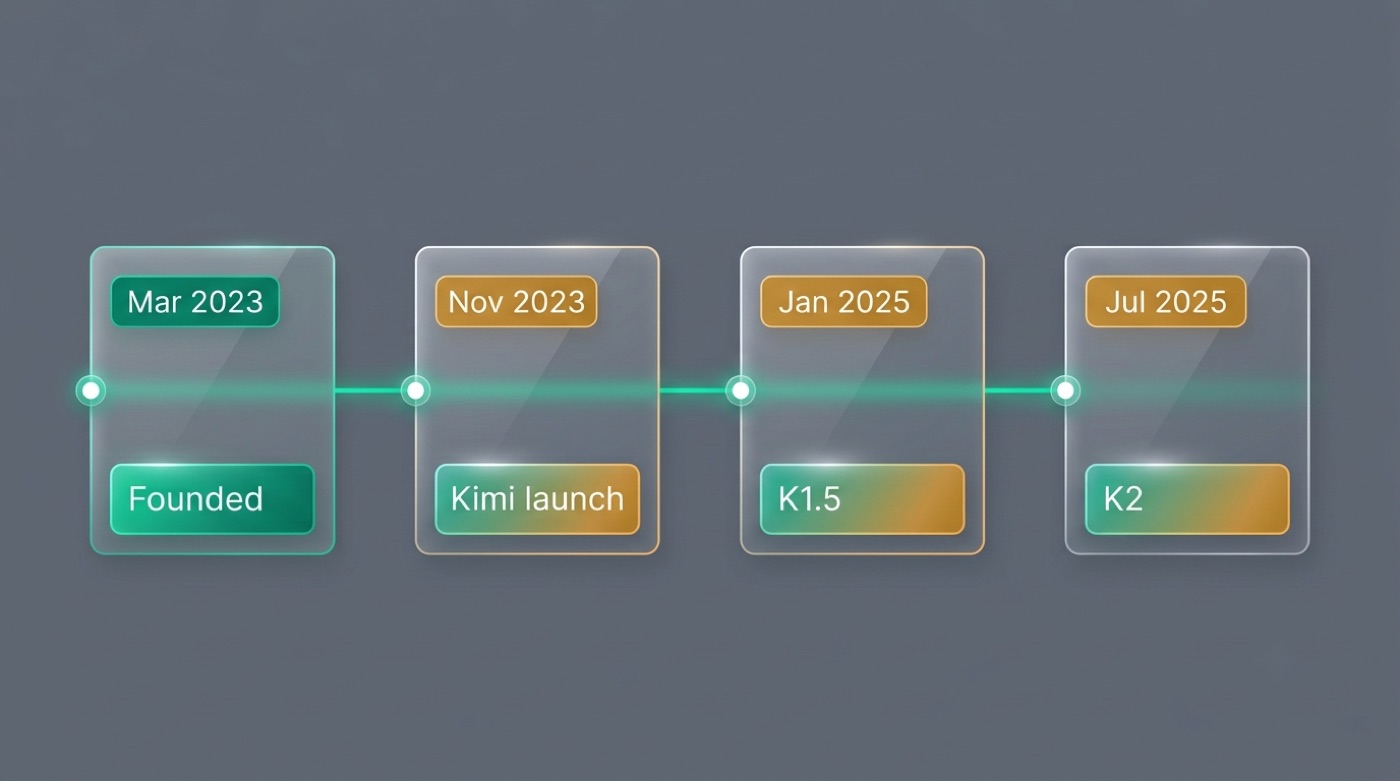
Kimi is the AI chatbot and family of large language models built by Moonshot AI, a Beijing startup founded in March 2023. This page is a plain-English map of kimi moonshot ai — the assistant, the company behind it, the K1.5-to-K2 model family, and the long context window that made Kimi famous, according to the Wikipedia entry on Kimi.

Everything below is sourced from public records — Moonshot AI’s own site and Wikipedia — and every figure is dated so you can tell what’s current versus historical. Where the lineup has moved on since publication, we say so and point you to the official page instead of guessing.
What is Kimi?
Kimi AI is a conversational assistant, and the underlying models are also called Kimi — Moonshot AI ships both under the same name. The Kimi chatbot handles chat, document analysis, and coding help, while the same model family also powers a developer API.
A long-context chatbot from China
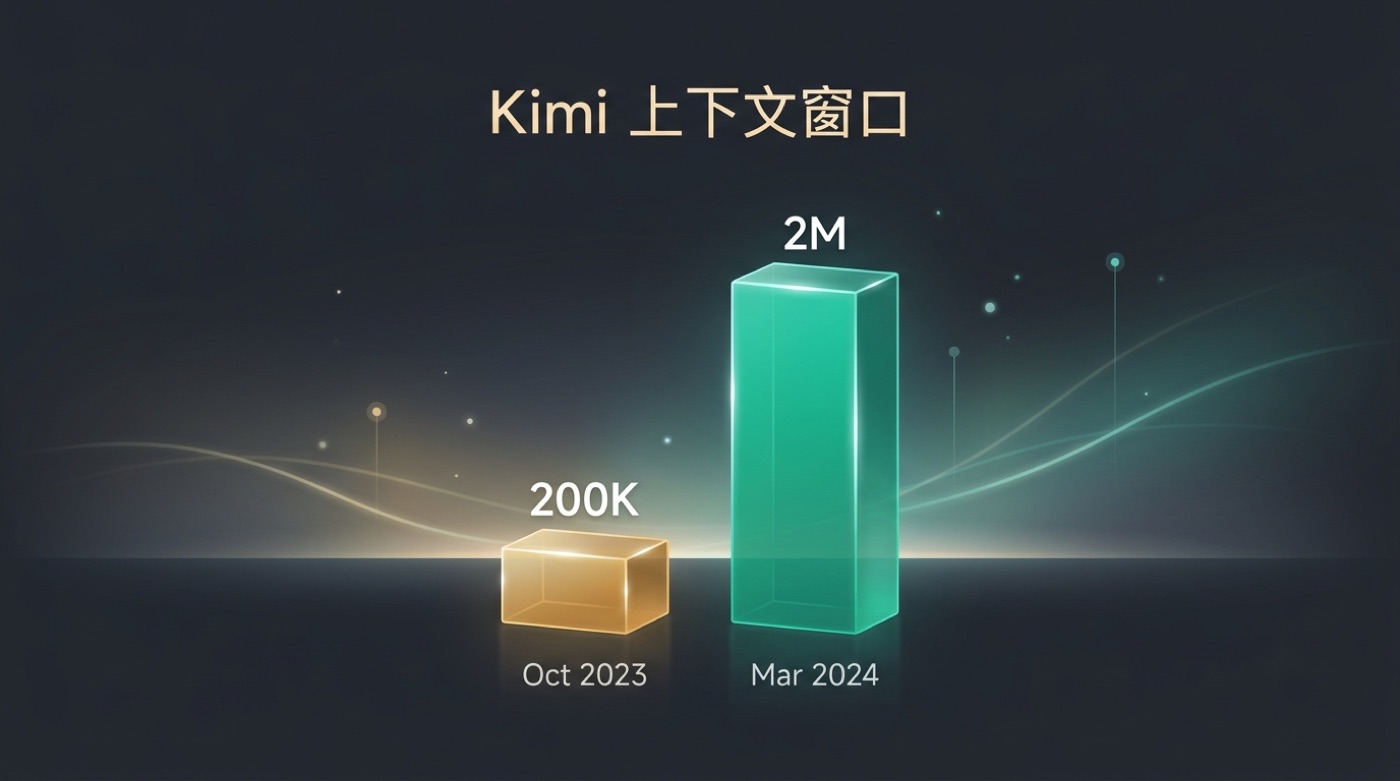
Kimi entered closed beta in October 2023 and went public on November 16, 2023, initially supporting roughly 128,000 tokens of context, described at launch as handling up to 200,000 Chinese characters in a single conversation. That headline number — how much text the assistant can hold in working memory at once — became Kimi’s calling card almost immediately, and it kept growing from there.
What Kimi is used for
Typical use cases reported for Kimi assistant include:
- Summarizing long documents, contracts, or research papers in one pass
- Reading and reasoning over large codebases for coding help
- Multilingual chat and translation between Chinese and English
- Research tasks that require holding many sources in context at once
- Uploading long PDFs and asking follow-up questions about them
Exact capabilities change with each model release, so treat this as a general picture rather than a fixed spec sheet — always check kimi.com for what’s live today.
Who makes Kimi? Moonshot AI, the company
Moonshot AI is the company behind Kimi, and its own story is arguably as distinctive as the product.
Founders and mission
Moonshot AI was founded in March 2023 by three Tsinghua University schoolmates: Yang Zhilin, Zhou Xinyu, and Wu Yuxin. The company is headquartered in Beijing. Its Chinese name, 月之暗面, translates to “Dark Side of the Moon” — a direct nod to Pink Floyd’s 1973 album of the same title. The fuller founding and product story lives on the Moonshot AI page on this site.
Funding and standing
Moonshot AI has raised several large rounds since its 2023 seed, and — per Wikipedia — is widely counted among China’s “6 AI Tigers,” a group of startups built to compete with the American frontier labs. A few quick facts about the company:
- Founded March 2023 in Beijing by three Tsinghua schoolmates
- Private company, roughly 300 employees as of 2026 (per Wikipedia)
- Counted among China’s “6 AI Tigers”
- Flagship products include the Kimi chatbot plus Kimi Researcher, Agent, Code, and Audio
- Also behind the Mooncake open-source serving platform
| Round | Date | Amount | Reported valuation |
|---|---|---|---|
| Seed | 2023 | $60M | $300M |
| Alibaba-led | February 2024 | $1B | $2.5B (~36% stake) |
| Tencent + Gaorong Capital | August 2024 | $300M | $3.3B |
| IDG Capital-led (per Wikipedia) | October 2025 | ~$600M | $3.8B pre-money |
By 2026, Wikipedia lists Moonshot AI at roughly 300 employees. As with any fast-moving private company, treat the newest figures as directional and verify against current reporting if precision matters for your use case.
The Kimi model family
The name “Kimi” covers more than one generation of models. Moonshot AI has iterated the underlying architecture several times since the November 2023 launch, and the naming follows a K-prefixed version scheme.
From K1.5 to K2
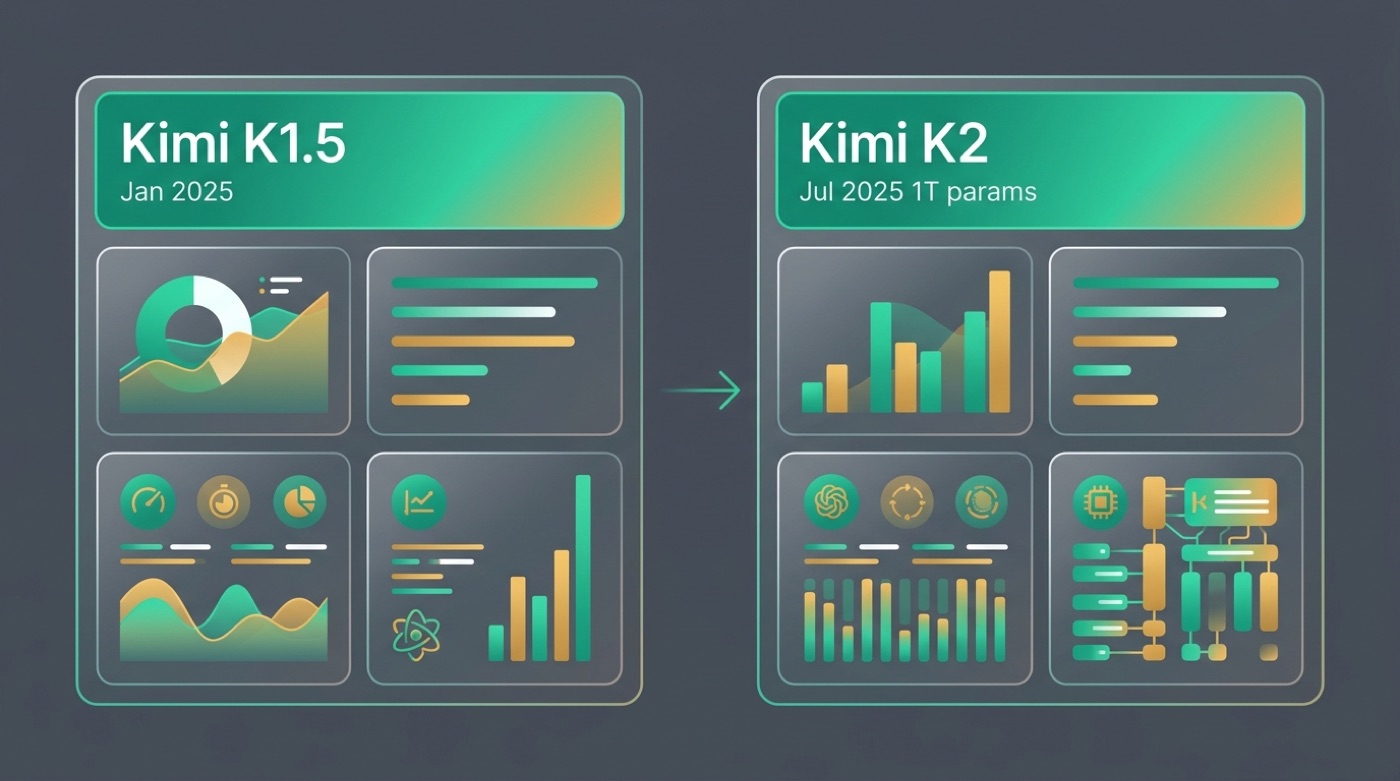
Kimi K1.5 launched January 20, 2025; Moonshot AI said it matched OpenAI o1 in math, coding, and multimodal reasoning benchmarks — a vendor claim worth treating as such rather than an independently audited result. Kimi K2 followed in July 2025 as a 1-trillion-parameter mixture-of-experts model with 32 billion active parameters, open-weighted under a modified MIT License and published for anyone to download and self-host. A follow-up, K2-Instruct-0905, shipped September 9, 2025, and extended the context window to 256,000 tokens.
“Kimi K2 is a 1-trillion-parameter mixture-of-experts model with 32 billion active parameters, open-sourced under a modified MIT License.”
Newer releases (verify the current lineup)
Wikipedia records still newer iterations beyond K2 — including a K2.5 release dated January 2026 and a K3 release dated July 16, 2026, reportedly at 2.8 trillion parameters. We’re deliberately not repeating specific benchmark or pricing numbers for these newest models here, because marketing figures for fresh releases change fast and are easy to get wrong. If you need the current model name, context limit, or pricing, confirm it directly on kimi.com or moonshot.ai before relying on it.
| Model | Release date | Headline spec |
|---|---|---|
| Kimi (initial) | Nov 16, 2023 | ~128,000 tokens / 200,000 Chinese characters |
| Kimi (beta) | March 2024 | Up to 2,000,000 Chinese characters in one prompt |
| Kimi K1.5 | Jan 20, 2025 | Claimed to match OpenAI o1 on math/coding/multimodal |
| Kimi K2 | July 2025 | 1T parameters (MoE), 32B active, open weights |
| Kimi K2-Instruct-0905 | Sep 9, 2025 | 256K token context |
| Kimi K2.5 / K3 | Jan 2026 / Jul 16, 2026 | Per Wikipedia — verify current specs on kimi.com |
The signature feature: a very long context window
Context window is the amount of text a model can “hold in mind” at once — a short window forces you to paste small chunks and re-explain yourself; a long one lets you drop in an entire book, contract, or codebase and ask questions across all of it in a single conversation. That is the single feature Kimi has been most identified with since launch.
At release in November 2023, Kimi’s context window handled roughly 128,000 tokens, described publicly as up to 200,000 Chinese characters per conversation. By the March 2024 beta, that ceiling had grown to as much as 2 million Chinese characters in a single prompt — a jump that put Kimi’s long-context handling well ahead of most consumer chatbots at the time. Subsequent model updates, such as the September 2025 K2-Instruct-0905 release, have used token-based limits (256K tokens) rather than the original character-based framing, so figures from different dates aren’t always directly comparable.
A long context window is what makes it practical to:
- Paste an entire contract or research paper instead of splitting it into chunks
- Keep a whole codebase in view while asking coding questions
- Hold a long chat history without the assistant “forgetting” earlier turns
- Compare several long source documents against each other in one prompt
How to use Kimi (and is it free?)
Getting started with Kimi doesn’t require anything beyond a browser or the mobile app, and the basics are the same regardless of which model version is live.
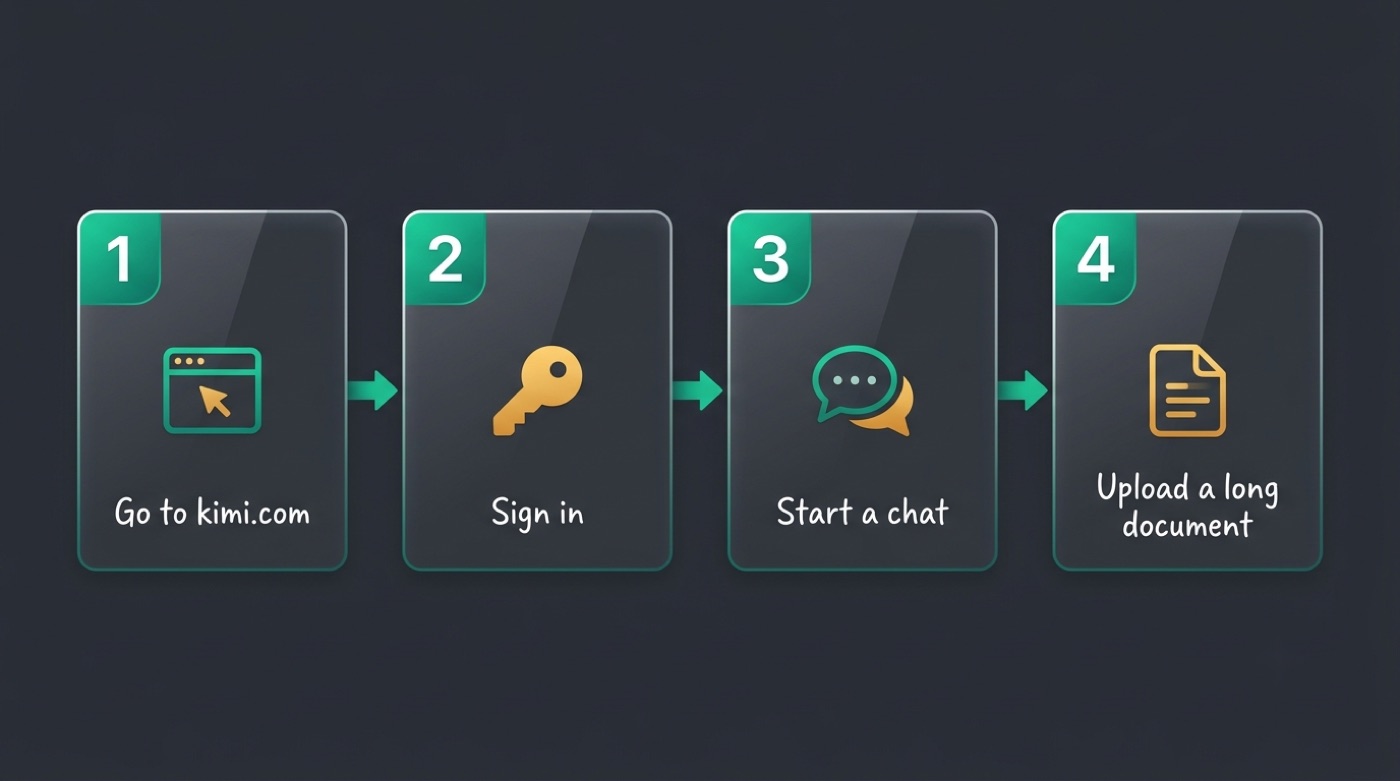
- Go to kimi.com (or kimi.moonshot.cn if you’re in mainland China).
- Sign in or create a free account.
- Start a new chat and type your question, or paste text directly.
- Upload a long document, PDF, or set of files if you need Kimi to work across a large amount of text.
- Ask follow-up questions — the model retains the uploaded context for the rest of the conversation.
- For programmatic access instead of the chat UI, register for the developer API at platform.moonshot.ai.
Web, mobile, and developer access. Kimi is available at kimi.com internationally and at kimi.moonshot.cn inside China, with companion mobile apps. Developers who want to build on top of the models use the API at platform.moonshot.ai rather than the consumer chat interface.
Self-hosting the open-weight releases. Because Kimi K2 and its successors are published as open weights, technical users can download and run them independently instead of using the hosted chatbot. The weights and model cards are published at huggingface.co/moonshotai and on github.com/MoonshotAI.
Free tier. Moonshot AI offers a free tier for the hosted Kimi chatbot, subject to rate limits — you can try the assistant without paying anything, though heavy use will run into caps.
Paid subscriptions. Reported paid tiers use musical-tempo names (Moderato, Allegro, Allegretto, Vivace), each unlocking higher usage limits. Pricing for these tiers changes over time, so treat any number you see elsewhere as a snapshot and confirm the current plan and cost on the official kimi.com pricing page before subscribing.
Explore more
This page is the overview — the pages below go deeper on specific parts of kimi moonshot ai:
- What is Kimi? — a closer look at the assistant itself
- Moonshot AI — the company, its founders, and its funding history
- Kimi K2 — the open-weight flagship model, its architecture, and license
- Long context window — how Kimi’s context limits evolved release by release
- How to use Kimi — a step-by-step walkthrough of the chat and API
- Is Kimi free? — a full breakdown of the free tier versus paid subscriptions
Explore the Kimi & Moonshot AI Guide
Dive deeper into our fact-checked reference:
- What is Kimi — the assistant, at a glance
- Moonshot AI — the company, founders and funding
- Kimi K2 — the open-weight mixture-of-experts model
- Kimi K1.5 — the reasoning model
- Kimi long context — up to 2M characters explained
- Kimi features — capabilities across coding, docs and research
- How to use Kimi — step-by-step
- Kimi API — access and open weights
- Is Kimi free — free access explained
- Kimi vs DeepSeek · Kimi vs ChatGPT
Frequently Asked Questions
- What is Kimi?
Kimi is an AI assistant developed by the Chinese company Moonshot AI. It is known for its very long context window (up to 2 million Chinese characters) and strengths in reading long documents, coding, writing and research. On this site you can chat with a Kimi-style assistant for free.
- What is Moonshot AI?
Moonshot AI (月之暗面, “Dark Side of the Moon”) is an AI startup founded in March 2023 in Beijing by Yang Zhilin, Zhou Xinyu and Wu Yuxin. It is one of China’s so-called “6 AI Tigers” and is backed by investors including Alibaba and Tencent.
- Is this the official Kimi from Moonshot AI?
No. kimimoonshotai.pro is an independent, unofficial site that lets you chat with a Kimi-style assistant for free and provides reference guides about Kimi and Moonshot AI. It is not affiliated with, endorsed by, or operated by Moonshot AI. For the official product, visit kimi.com or moonshot.ai.
- Is the Kimi chat free?
Yes — you can start chatting instantly, with no login and no download. Basic messages are free and available around the clock. Extended usage is available via an optional subscription shown in the chat interface.
- What are the Kimi K1.5 and Kimi K2 models?
Kimi K1.5 (released January 2025) is a reasoning-focused model that Moonshot said matched OpenAI’s o1 on some math, coding and multimodal tasks. Kimi K2 (July 2025) is an open-weight mixture-of-experts model with about 1 trillion total parameters and 32 billion active per token. See our model guides for details.
- How long is Kimi’s context window?
Kimi launched in October 2023 supporting up to 200,000 Chinese characters per conversation, and was upgraded in March 2024 to handle up to 2 million Chinese characters in a single prompt — one of the longest context windows among consumer AI assistants.